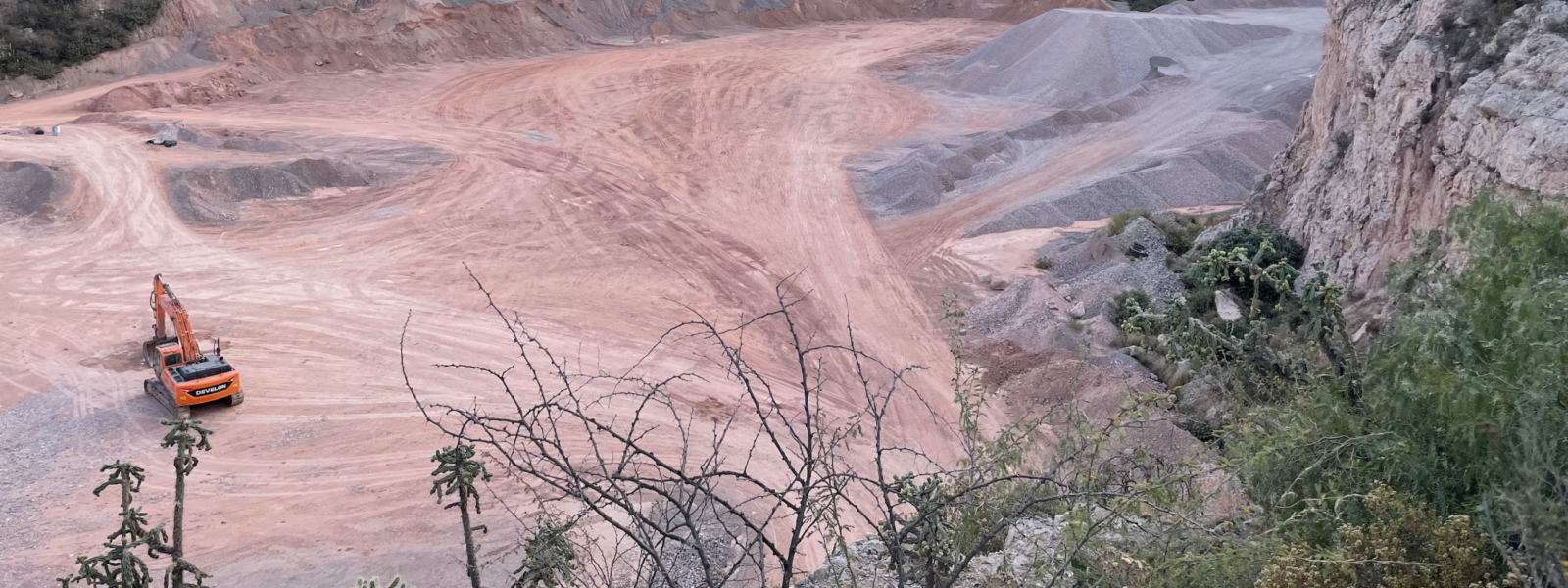
Catastrophe occurs, then, when the dominant power relations of powerful actors — such as the state, transnational corporations, and other public or private institutions — give rise to extractive practices that lead to ecological or cultural destruction. What is lost or eroded includes water, mineral, and energy resources, but also ancestral knowledge, communal practices, living economies, and forms of self-determination. Ultimately, these are not isolated cases, but interconnected webs that form part of the very metabolism of the planet.
The crisis of a Westernized world — the Anthropocene, if viewed through the lens of ecological collapse; the Capitalocene, if the economy is placed at the center of the analysis; or collapse, if we focus on the rapid erosion of social, political, economic, industrial, and moral spheres — also becomes a meta-concept in the geopolitical game of catastrophe. This is precisely what the articles in this dossier have allowed us to reflect upon. Rather than insisting on portraying the image of the civilizational decline of the West, we felt it would be more productive to ask: for whom, and where, is catastrophe already a lived experience?
Noda Ramírez, Eder J. and Monika Streule (2026) Editorial. Futuros posibles desde el presente catastrófico: Gobernanza, extractivismo y capitalismo racial, Iberoforum 6.2, 1–16. DOI: 10.48102/if.2026.v6.n2.544
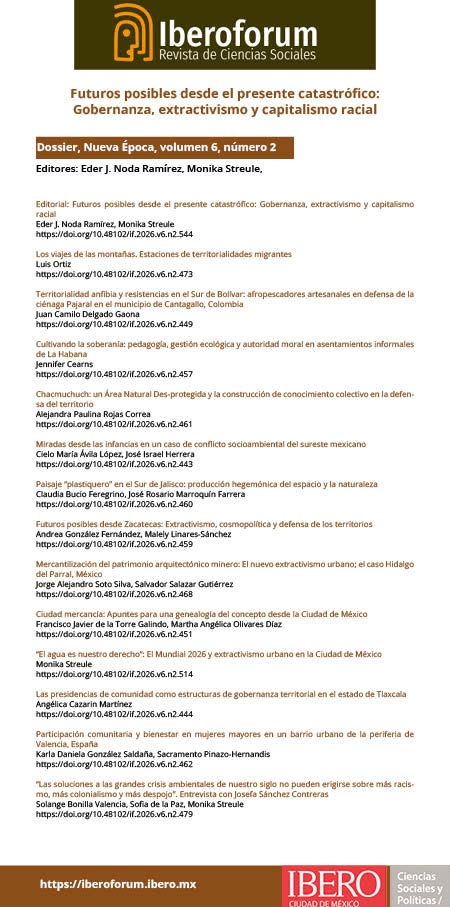
To view the full dossier, you can access this link.
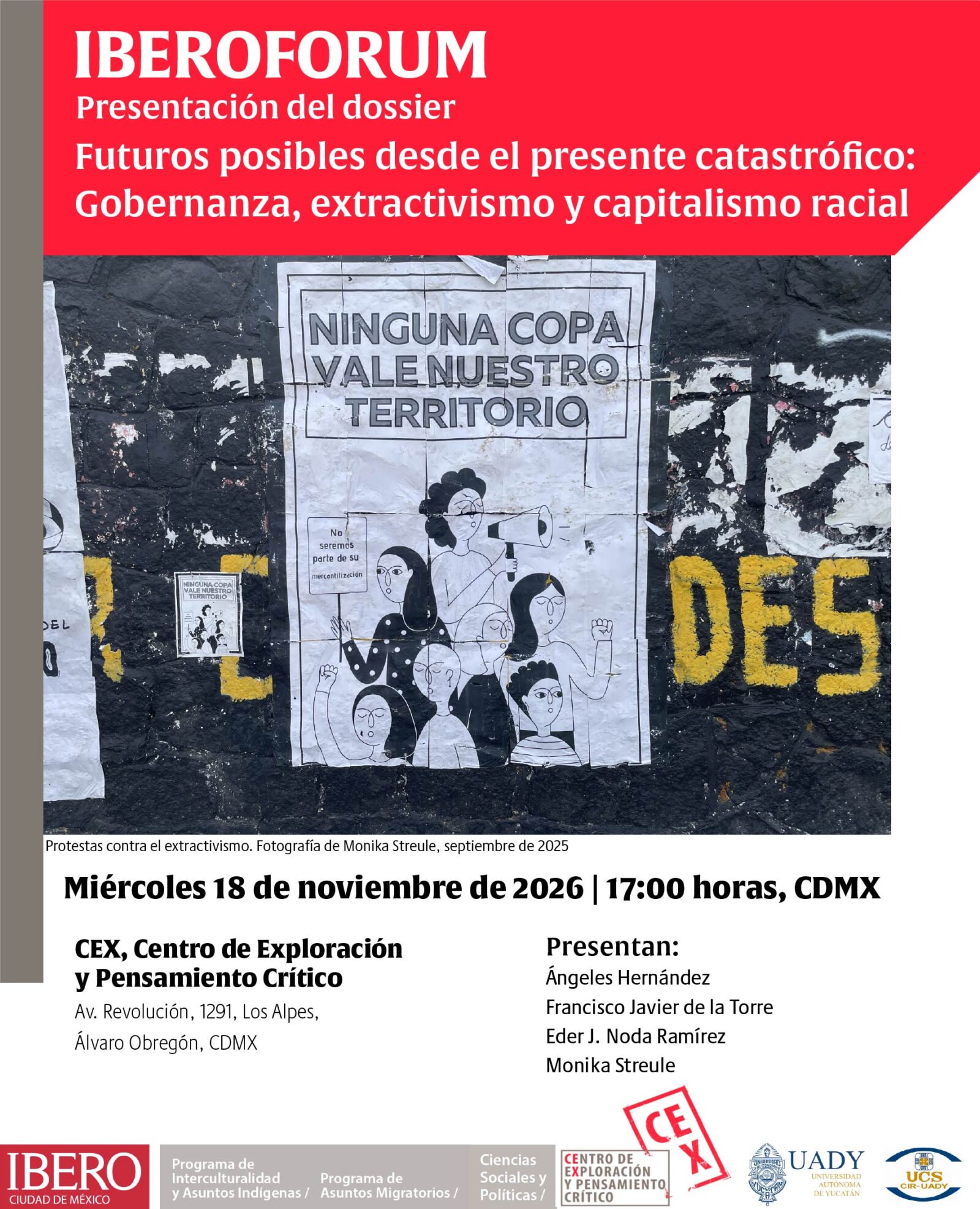
Presentation of the dossier with special guests:
Tuesday November 17, 2026, 10:00 a.m., Mérida and online
Chair: Eder J. Noda y Monika Streule
Moderation: Jaime López
Presenters: Eder Talavera, Abraham Fajardo, Denisse Díaz, Celida Padilla
Wendesday November 18, 2026, 5:00 p.m., Mexico City
Presenters: Angeles Hernández, Francisco Javier de la Torre, Eder J. Noda, Monika Streule
