Página 11 de 12

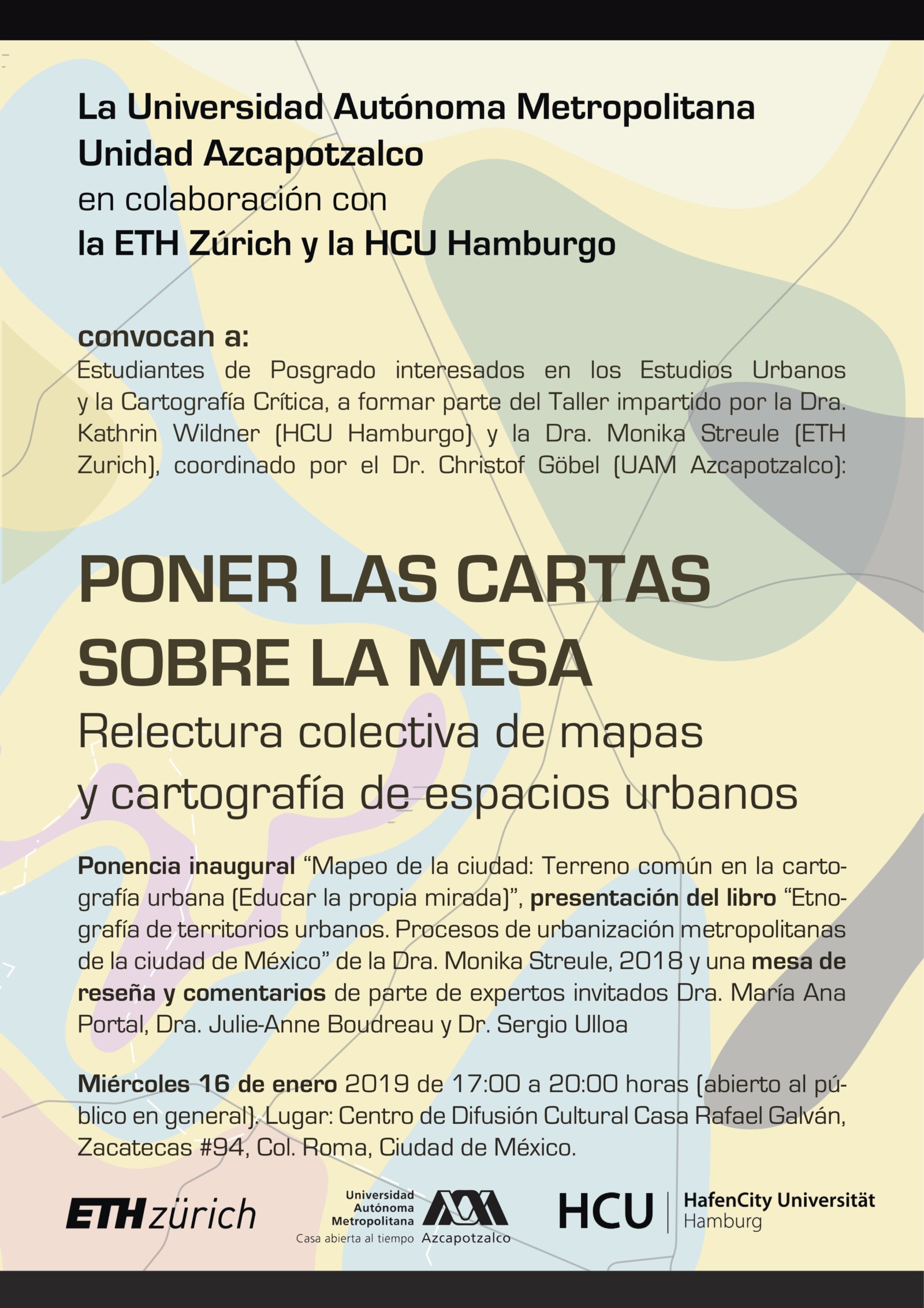
Poner las cartas sobre la mesa: Relectura colectiva de mapas y cartografía de espacios urbanos

Ciudad de México – 2019

Confrontados con los procesos de urbanización complejos y las diversas realidades sociales simultáneas, un repensar de las metodologías urbanas es necesario. En este contexto el taller internacional PONER LAS CARTAS SOBRE LA MESA invita a revisar las herramientas de la cartografía como producción de conocimiento sobre los mundos urbanos y sus espacios. La cartografía es una herramienta omnipresente de la investigación urbana crítica transdisciplinaria que despierta un interés amplio no sólo en las ciencias sociales, sino también en el contexto de los proyectos de investigación artística y activista.

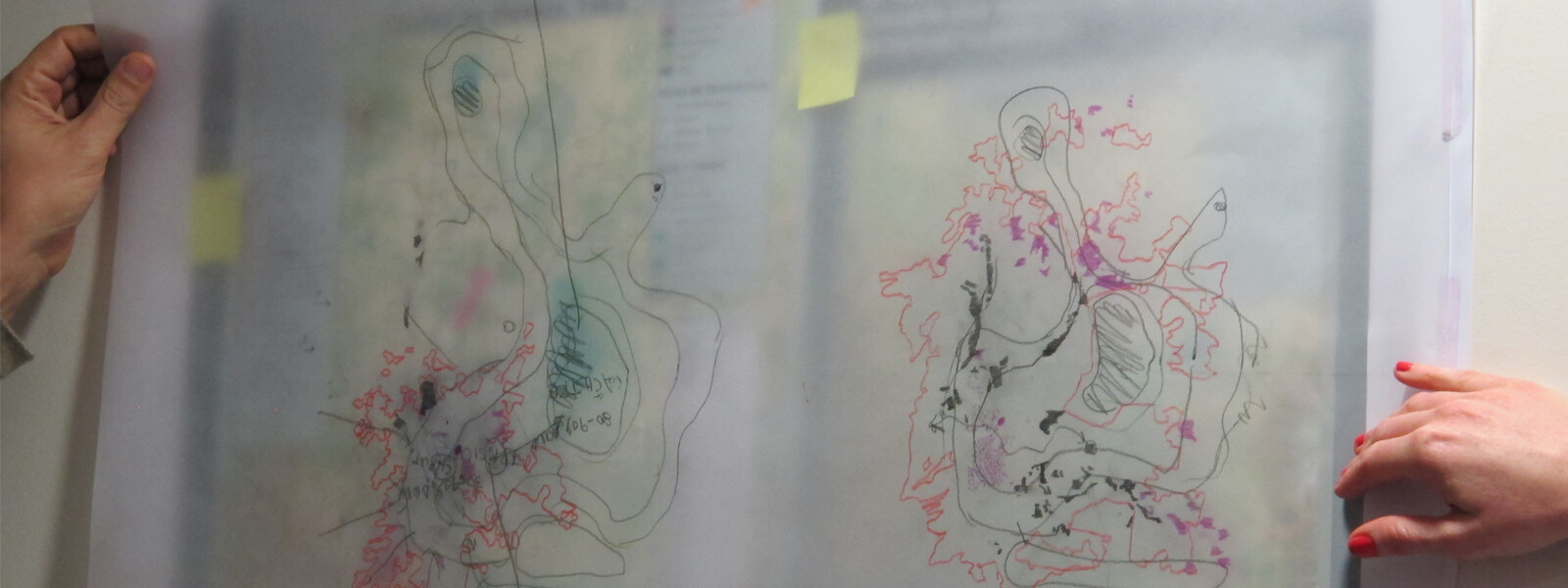
El taller tiene por objetivo reflexionar y discutir sobre las posibilidades de diferentes formas de mapeo y cartografía para comprender los procesos de urbanización. Mientras que se escribe extensamente sobre los procesos de producción de mapas, su recepción y lectura es un proceso menos evidente en la producción de conocimiento. Por eso se propone una RELECTURA COLECTIVA de proyectos cartográficos. A partir de la selección de proyectos cartográficos que representen la configuración urbana y territorial, el mapeo de procesos de gentrificación y la defensa del derecho a la ciudad; así como de mapeos del espacio político y artístico de la ciudad de México presentados por expertos, se realiza una relectura colectiva de mapas y un intercambio practico al centro del taller. El propósito es cuestionar nuestra propia visión y producir colectivamente nuevos conocimientos que permitan una comprensión diferente de la ciudad y una reflexión sobre un otro posible futuro urbano.

Se inicia el análisis de los casos de estudio en grupos de trabajo. Los resultados de las discusiones se unirán para realizar intentos colectivos y visualizar los nuevos conocimientos en mapas. Como producto se planea una publicación conjunta con los materiales del taller y las contribuciones de los participantes. Impartido por la Dra. Kathrin Wildner (HCU Hamburgo) y la Dra. Monika Streule (ETH Zürich),junto con cartógrafas y colectivos mexicanos, como son GeoComunes, atea, y el grupo de trabajo Apropiación simbólica del espacio público de la UAM-A. El taller va dirigido a alumnos de posgrado, comunidad universitaria y público en general con conocimientos en investigación cualitativa del espacio urbano o/y cartografía urbana.

Sociología II: Perspectivas actuales en los estudios urbanos

Curso segundo semestre – presentado anualmente

(resumen en ingles)

This series of lectures enables students to comprehend the built environment in its social context. It approaches the architectural profession from two different angles: macro-sociological and micro-sociological.

In the first part, Sociology II focuses on current perspectives of analysis in urban studies. Theoretical approaches are presented with the help of concrete case studies. First, the postcolonial perspective in urban studies will be introduced, illustrated with examples of empirical research. This part concludes with an introduction into scientific research by presenting different methods in the analysis of urbanization processes in Mexico City, Toyo and San Francisco (lecturer: Monika Streule). In the second part, different processes of urban regeneration will be discussed looking at various case studies in Europe, North America and North Africa. Followed by a presentation of different forms of gentrification (lecturer: Sandra Guinand). In the third part, different models of housing are discussed (lecturer: Marie Glaser).

Catálogo de cursos

¿Un ‘giro ontológico’ en los estudios urbanos?

RC21 Delhi – 2019

(resumen en ingles)

Amidst raging debates on new epistemologies of the urban, this session, in taking its cue from sociocultural anthropology, considers the need for an ontological approach to urban studies for a more radical reckoning of the multiplicity and alterity of urban worlds. Such a shift entails not only efforts to gain deeper understandings of different realities, but addresses the tension of holding incompatible urban experiences together in a comparative perspective.

While this resonates with arguments within urban studies to provincialise EuroAmerican perspectives, this intriguing possibility of decolonising urban theory through an ontological turn requires critical scrutiny. In asking how such an enquiry is distinct from existing (epistemological) analyses into the constitution of the urban, this session would like to explore moves embracing the incommensurability of different urban worlds, opening up empirical possibilities for dialogical approaches and distinct ways of understanding social realities.

In proposing to focus on the city as an important site of ontological intervention, we invite papers to reflect on accompanying challenges:

  • SPECIFICITY AND DIFFERENCE: How do we tackle the specificity of the city and its predilection for incommensurability? When cities such as Delhi evoke their own platform for urban experiences, how can we justify the use of broad analytical filters within urban studies such as “informal urbanism” that seek to transcend and compromise these differing realities in all their otherness?
  • DECOLONISING METHODS: What are the methodological registers that allow translation of concepts alien to the conventional urban analytic without marginalising the worlds from which they emanate? Equally, as ontologies can only be grasped through comparison as contingent variations of one another (both North/South and South/South), and are often entangled, what kind of methodologies allow the study of dissimilar and uncommon singular realms without the overarching reference of ‘the urban’?
  • ETHNOGRAPHIC THEORISATION: In endorsing an ontological pursuit of “knowledge practice”, how do we engage with the idea of the city as ethnography? Moreover, how can ethnographic representations of the urban help to acknowledge ontological difference, privileging more vernacular conceptualisations (e.g. jugaad urbanism), and putting them into conversation?

Stream organized by Pushpa Arabindoo and Monika Streule at the RC21 conference, Delhi 2019

Hacia un nuevo vocabulario de los procesos de urbanización: un enfoque comparativo

Urban Studies – 2018

(resumen en ingles)

Contemporary processes of urbanisation present major challenges for urban research and theory as urban areas expand and interweave. In this process, urban forms are constantly changing and new urban configurations are frequently evolving. An adequate understanding of urbanisation must derive its empirical and theoretical inspirations from the multitude of urban experiences across the various divides that shape the contemporary world. New concepts and terms are urgently required that would help, both analytically and cartographically, to decipher the differentiated and rapidly mutating landscapes of urbanisation that are being produced today.

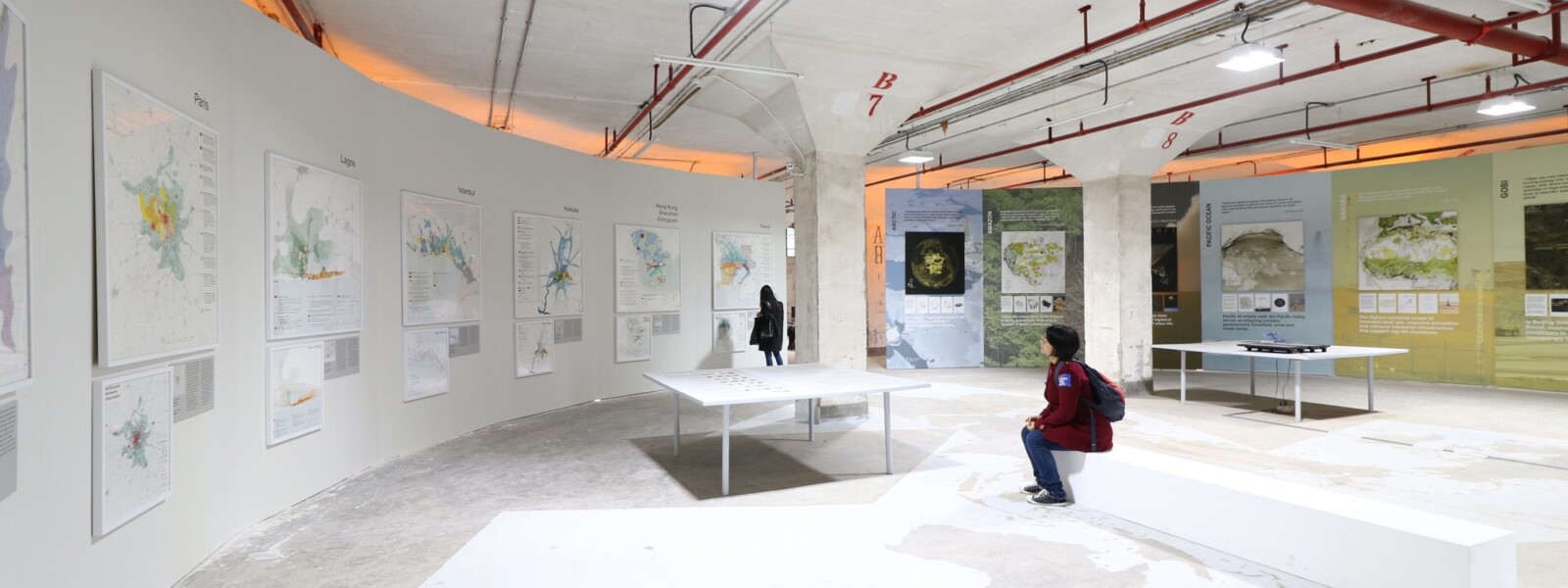
One of the key procedures to address these challenges is the application of comparative strategies. Based on postcolonial critiques of urban theory and on the epistemologies of planetary urbanisation, this paper introduces and discusses the theoretical and methodological framework of a collaborative comparative study of urbanisation processes in eight large metropolitan territories across the world: Tokyo, Hong Kong/Shenzhen/Dongguan, Kolkata, Istanbul, Lagos, Paris, Mexico City and Los Angeles.

In order to approach these large territories, a specific methodological design is applied mainly based on qualitative methods and a newly developed method of mapping. After the presentation of the main lines of our theoretical and methodological approach we discuss some of the new comparative concepts that we developed through this process: popular urbanisation, plotting urbanism, multilayered patchwork urbanisation and the incorporation of urban differences.

Schmid, Christian, Karaman, Ozan, Hanakata, Naomi, Kallenberger, Pascal, Kockelkorn, Anne, Sawyer, Lindsay, Streule, Monika, Wong, Kit Ping (2018) Towards a new vocabulary of urbanization processes: a comparative approach. Urban Studies 55(1): 19–52. DOI 10.1177/0042098017739750

Leer artículo