Seite 9 von 20

Bypass urbanism: Re-ordering center-periphery relations in Kolkata, Lagos and Mexico City

Environment and Planning A – 2021

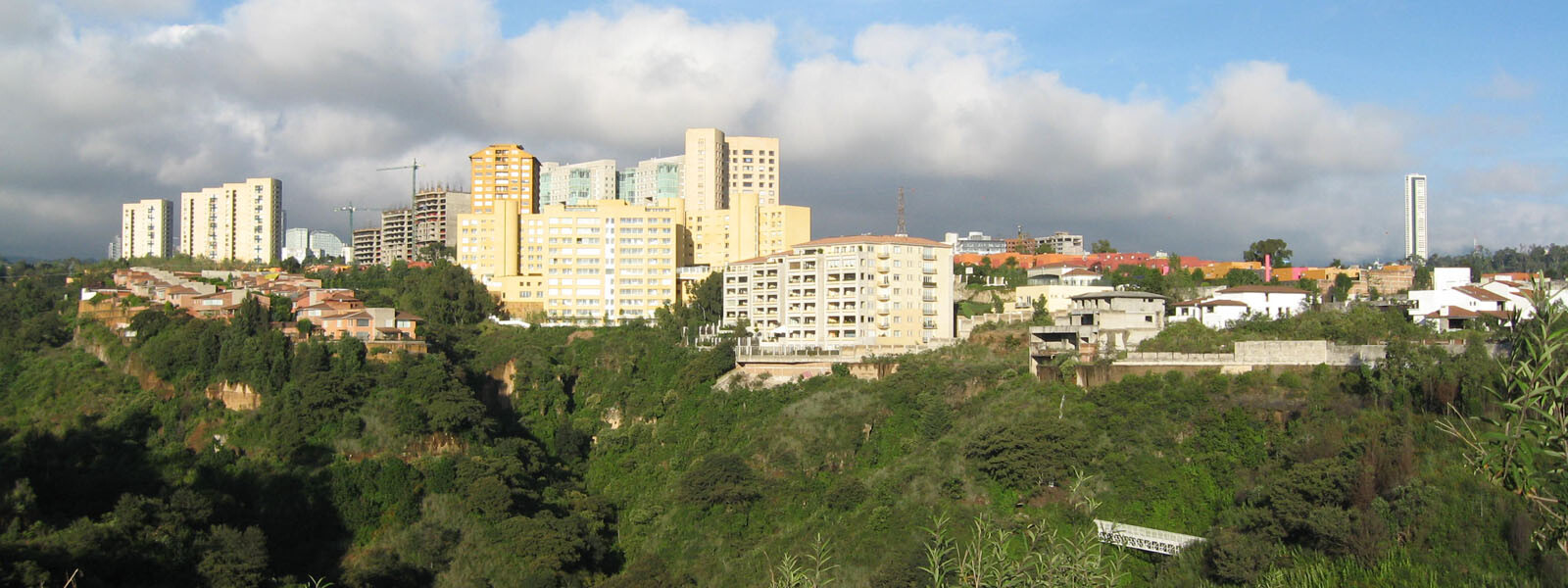
This paper introduces the concept of “bypass urbanism” to account for a process of urbanization that is reordering center-periphery relations of urban regions into new hierarchies. Bypass urbanism became visible through a comparison of large-scale urban transformations at the peripheries of Kolkata, Lagos, and Mexico City by zooming out and considering their impacts on the socio-spatial structure of the extended urban regions.

Bypass urbanism is not emerging from the construction of a singular new town or real estate project, but is the result of the simultaneous development of an ensemble of various independent but related projects. Therefore, bypass urbanism usually does not emanate from a coherent planning initiative, even less so from a hidden “master plan” at the hands of any single developer or state agency, but it emerges through a convergence of interests over large areas of land at the geographical periphery of urban regions that have been made available for new urban developments by various measures.

We understand bypass urbanism as a multidimensional process that includes material-geographical bypassing, the bypassing of regulatory frameworks, and socio-economic bypassing in everyday life. It results in the creation of exclusive and excluding spaces that enable middle and upper-class lifestyles, at the same time leading to the peripheralization of extant urban areas that are bypassed and neglected. The massive scale of bypass urbanism that we have observed represents a new quality of urban development resulting not in isolated urban enclaves or archipelagos, but in the fundamental restructuring of the extended urban region with far reaching and incalculable repercussions.

Sawyer, Lindsay, Schmid, Christian, Streule, Monika, Kallenberger, Pascal (2021) Bypass urbanism: Re-ordering center-periphery relations in Kolkata, Lagos and Mexico City. Environment and Planning A: Economy and Space 53.4, 675–703. DOI: 10.1177/0308518X20983818


Artikel lesen

Widerstand gegen die Rohstoffausbeutung

analyse & kritik – 2021

Die Soziologin Maristella Svampa analysiert die Rolle afro-lateinamerikanischer, indigener und feministischer Gruppen in Umweltkonflikten.

Streule, Monika (2021) Widerstand gegen die Rohstoffausbeutung. Die Soziologin Maristella Svampa analysiert die Rolle afro-lateinamerikanischer, indigener und feministischer Gruppen in Umweltkonflikten, in: analyse & kritik Nr. 667, 19.01.2021.

Buchbesprechung lesen

Ungekürzte Fassung in der Zeitschrift Lateinamerika Nachrichten

Urban territories and knowledge otherwise. Ethnographic concept building for a more global urban theory

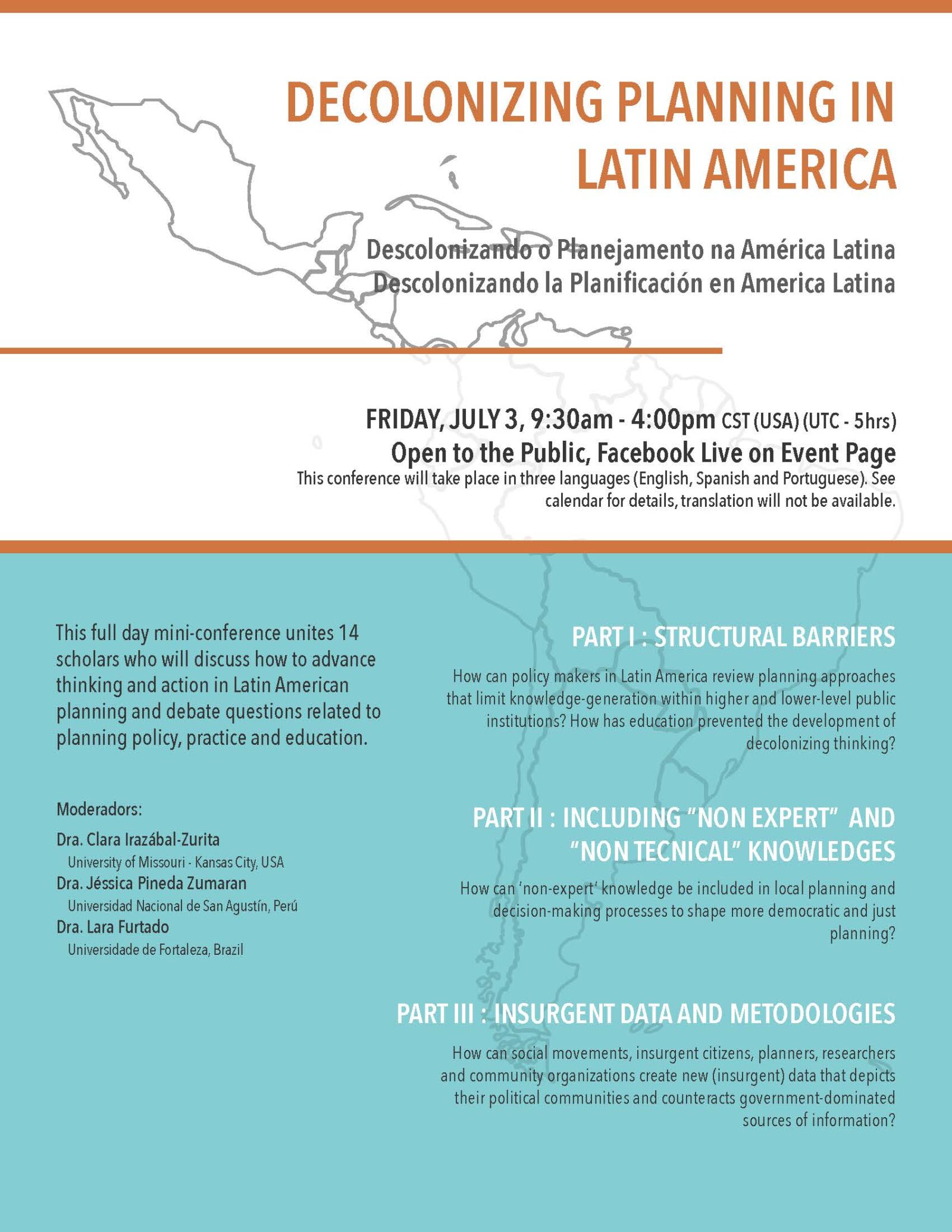
Decolonizing Planning in Latin America Konferenz – 2020

Vortrag an der Konferenz Decolonizing Planning in Latin America PART II: Including ‘non-expert’ and ‘non-technical’ knowledges. Diese ganztägige Minikonferenz bringt 14 Wissenschaftler*innen zusammen. Im Zentrum der gemeinsamen Diskussion steht die Frage, wie das Denken und Handeln in der lateinamerikanischen Stadtplanung vorangetrieben werden kann, besonders in Bezug zu Politik, Praxis und Bildung.

Freitag, 3. Juli 2020, 9.30–16.00 CST (USA) (UTC – 5h)

Öffentliche online-Veranstaltung
Live Event Page
Konferenz-Video

Die Konferenz findet in drei Sprachen statt (Englisch, Spanisch und Portugiesisch). Einzelheiten finden Sie im Programm. Es gibt keine Übersetzung.
Moderation: Jéssica Pineda-Zumarán (Universidad Nacional de San Augustín, Perú); Clara Irazábal-Zurita (University of Missouri – Kansas City, United States); Lara Furtado (Universidade de Fortaleza, Brazil)

Programm PDF

Popular Urbanization: Conceptualizing urbanization processes beyond informality

IJURR – 2020

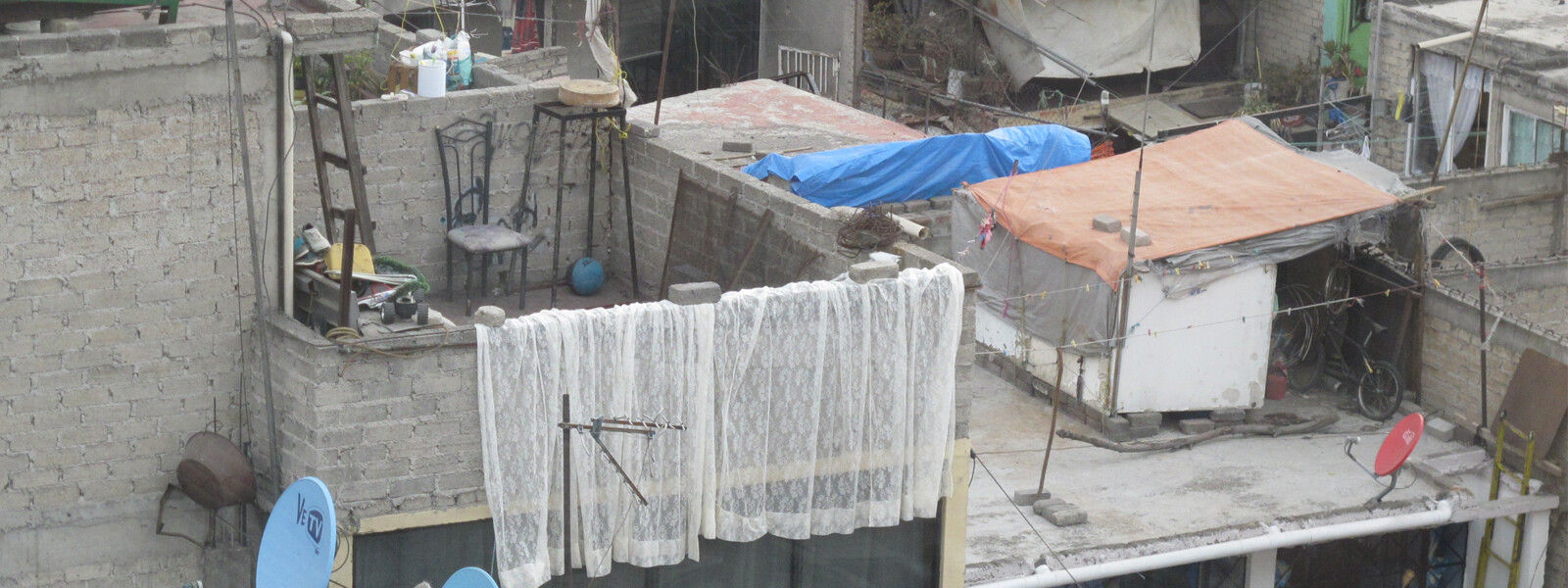
This article introduces the concept of popular urbanization to describe a specific urbanization process based on collective initiatives, self-organization and the activities of inhabitants. We understand popular urbanization as an urban strategy through which an urban territory is produced, transformed and appropriated by the people. This concept results from a theoretically guided and empirically grounded comparison of Mexico City, Istanbul and Lagos. Based on postcolonial critiques of urban theory and on the epistemologies of planetary urbanization, we bring urbanization processes in these urban regions into conversation with each other through a multidimensional theoretical framework inspired by Henri Lefebvre focusing on material interaction, territorial regulation, and everyday experience.

In this way, popular urbanization emerged as a distinct urbanization process, which we identified in all three contexts. While this process is often subsumed under the broader concept of ‘urban informality’, we suggest that it may be helpful to distinguish popular urbanization as primarily led by the people, while commodification and state agencies play minor roles. As popular urbanization unfolds in diverse ways dependent upon the wider urban context, specific political constellations and actions, it results in a variety of spatial outcomes and temporal trajectories. This is therefore a revisable and open concept. In proposing the concept of popular urbanization for further examination, we seek to contribute to the collective development of a decentered vocabulary of urbanization.

Der Artikel gewinnt den IG Award 2020 des Swiss Network for International Studies für eine herausragende Publikation, die einem breiteren Publikum zugänglich ist und insbesondere für internationale Organisationen relevant ist.

Artikel lesen

Streule, Monika, Karaman, Ozan, Sawyer, Lindsay, Schmid, Christian (2020) Popular Urbanization. Conceptualizing urbanization processes beyond informality. International Journal of Urban and Regional Research 44.4, 652–672. DOI:10.1111/1468-2427.12872