Seite 14 von 20

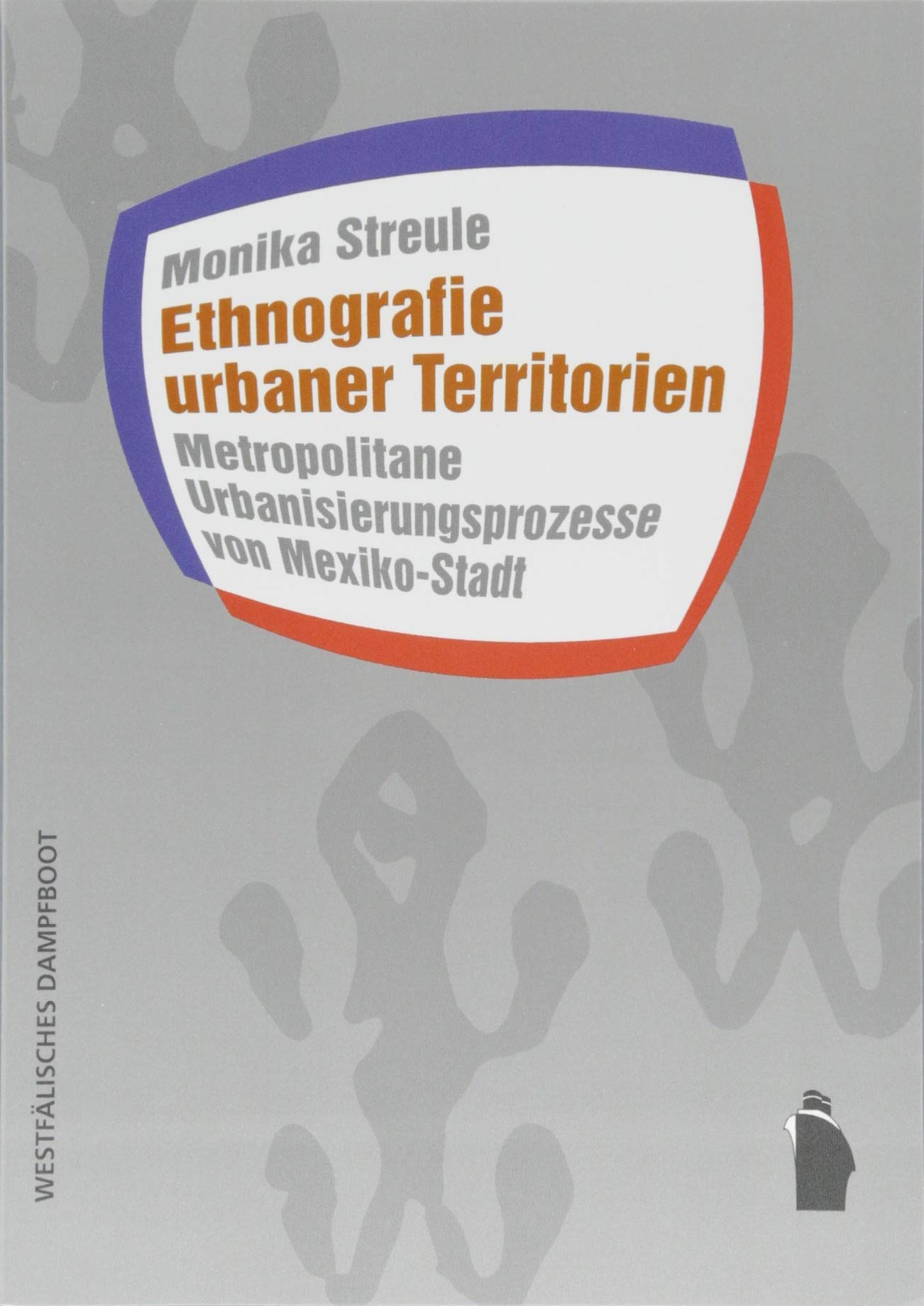
Ethnografie urbaner Territorien: Metropolitane Urbanisierungsprozesse von Mexiko-Stadt

Westfälisches Dampfboot – 2018

Ethnografie urbaner Territorien lädt buchstäblich ein, durch die Straßen von Mexiko-Stadt zu streifen. In ihrer Auseinandersetzung mit urbanen Produktions- und Aneignungsprozessen nimmt Monika Streule eine sozioterritoriale Perspektive auf tief eingeschriebene gesellschaftliche Machtverhältnisse ein. Für den ungewöhnlichen metropolitanen Maßstab ihrer qualitativ-empirischen Studie entwickelt sie theoretische Konzepte sowie transdisziplinär angelegte methodische Verfahren einer kritischen Stadtforschung und zeigt deren Anwendungsmöglichkeiten auf.

Doing mobile ethnography: Grounded, situated, and comparative

Urban Studies – 2020

This paper explores and discusses the experimental, critical, and self-reflective use of differing methods in urban studies. In the context of frequent calls to investigate urban processes in a planetary and comparative perspective, the empirical groundedness of research is among the particularly complex challenges urban scholars are confronted with. The key question is: how can qualitative-empirical methods, like ethnography or qualitative mapping, be adapted to explore contemporary urban conditions?

This paper seeks to contribute to current debates by introducing a specific methodological design of a mobile ethnography that enables an analysis of large and heterogeneous urban territories, in three main ways: first, by offering a theoretically informed and empirically grounded transductive research design, second, by proposing a complementary set of cartographic, historiographic and comparative methods of which mobile ethnography is a part of, and third, by suggesting post- and decolonial methodological perspectives, both conceptually by engaging with Latin American urbanisms, as well as empirically by furthering collaborative ways of knowledge production.

To conclude, the paper stresses the need to continually develop new inventive methods for comparative urban research, for two main reasons: (1) to enable scholars to question established geographical representations and parochial imaginaries of urban space, and (2) to problematize methodological and theoretical dogmas with situated knowledge. By suggesting different representations of the urban, the paper thus emphasises how important it is to transductively entangle empirical and theoretical conceptualizations to further decentre urban knowledge production.

Streule, Monika (2020) Doing mobile ethnography: Grounded, situated, and comparative. Urban Studies, 57.2, 421–438. DOI 10.1177/0042098018817418

Artikel lesen (in Englisch)

Comparative cartographies: Urban processes within and across metropolitan territories

AAG Konferenz Washington DC – 2019

(Zusammenfassung in Englisch)
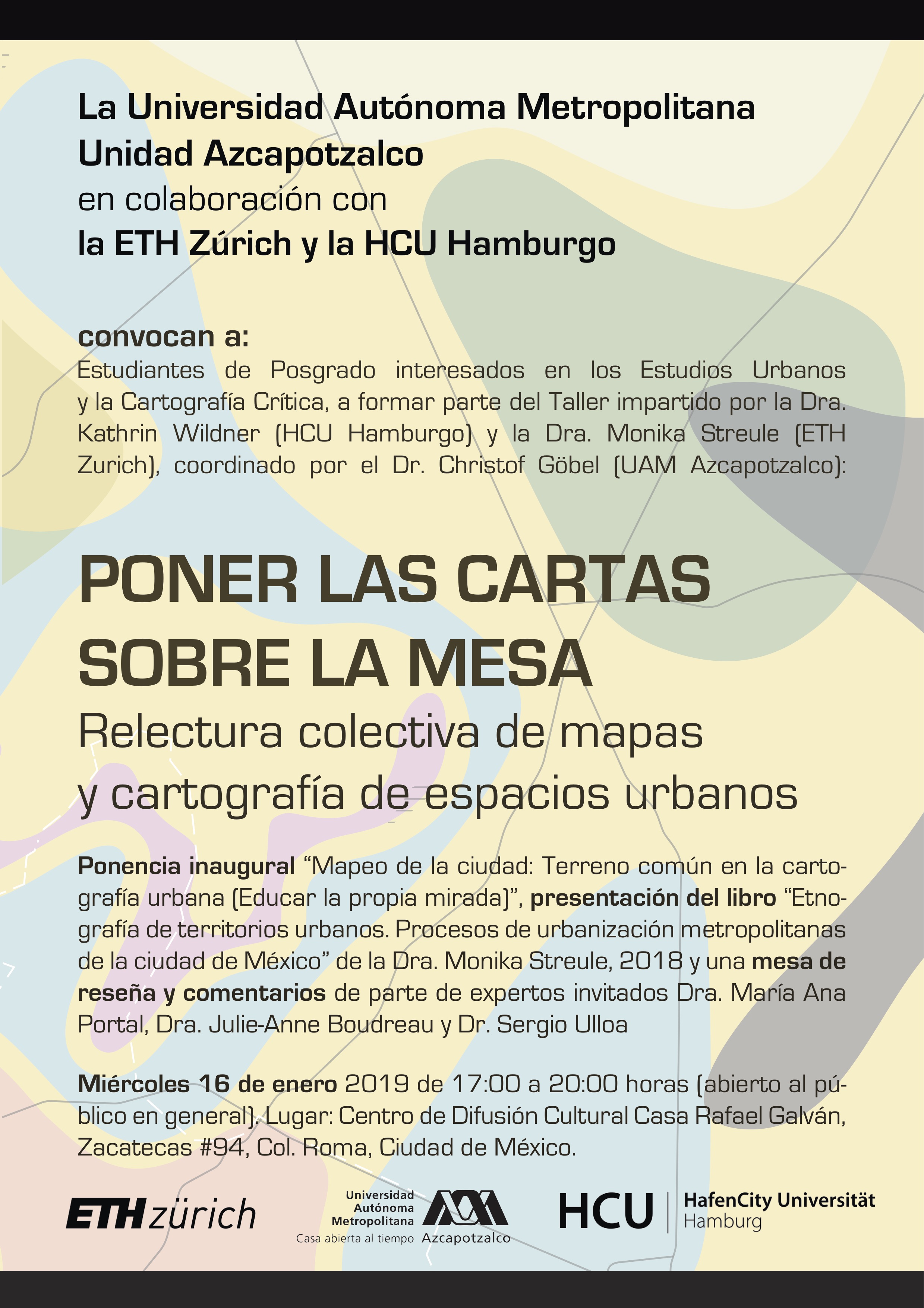
This paper seeks to respond to the growing prominence of post- and decolonial thoughts in the field of urban studies and the methodological consequences this critical engagement brings to the fore. Focusing on the entangled and relational character of urbanization, established concepts and more orthodox methodologies have to be rethought, revised, and rebuilt. In this context, the paper highlights the particular importance of methods in regard to comparative urbanism – given the openness and interdisciplinary character of the field itself – and invites to reflect on collaborative, dialogical and experimental ways of knowledge production across different urban worlds.

To this end, the paper places critical cartography and mapping tools both at the centre of attempts to understand and represent urbanization and as conceptual space to rethink comparative methodologies in urban studies more broadly. Taking the reflection on decolonizing methods as a starting point to collaboratively rethink the potentials and constraints mapping harbours for a critical urban research agenda and as a valuable tool to understand urbanisation as a dynamic, open ended and contested process of global transformation.

Paper presented at the Session Building new concepts in urban studies: Challenges and tactics in comparative urbanism, AAG Annual Meeting 2019, April 3–7, Washington DC

Ethnography of urban territories: Metropolitan urbanization processes of Mexico City

Think & Drink Kolloquium, Humboldt Universität Berlin – 2018

(Zusammenfassung in Englisch)

Ethnography of Urban Territories literally invites us to roam the streets of Mexico City. Based on the experience of 12 years intense empirical and theoretical commitment with the urban question in Mexico City, the book offers not only a compelling close look to everyday life in this metropolis, but also a novel interpretation of urbanization processes by focusing on inherent but often underrepresented power relations in the production and appropriation of urban territories.

In this book launch, the author Monika Streule explores and discusses the experimental, critical, and self-reflective use of differing methods in urban studies. One of the main concerns of the book unfolds around the question of how can qualitative-empirical methods, like ethnography or qualitative mapping, be adapted to explore contemporary urban conditions? The book seeks to contribute to current debates by suggesting a socio-territorial perspective and by introducing specific methodological design of a mobile ethnography that enables an analysis of large and heterogeneous urban territories. By suggesting different representations of the urban, the book thus emphasizes how important it is to transductively entangle empirical and theoretical conceptualizations to further decenter urban knowledge production.

Invited lecture at Think & Drink Colloquium, HU-Berlin Department of Urban and Regional Sociology and the Georg Simmel Centre for Metropolitan Studies, December 17, 2018, Berlin